Your Acupuncture Treatment is Personalized Just for You

At Kokoro Clinic, care is personalized to support the whole person, not just the symptom. Every treatment is tailored to your unique constitution, lifestyle, nervous system, and health goals using the principles of Chinese Medicine and integrative healing.
Healthcare with Heart
Chinese Medicine offers a range of natural healing modalities to support health and wellbeing, and I believe that you are the team captain in your healing journey. My role is to be your guide, coach, cheerleader, and accountability partner as we work together to restore balance and support your body's natural ability to heal.
Your first appointment gives us the time to explore your health history, lifestyle, symptoms, and goals. Using an evaluation of your tongue, pulse, and overall patterns of imbalance, I create a treatment plan tailored to your unique constitution. Rather than treating symptoms in isolation, Chinese Medicine recognizes the interconnected nature of the body, mind, and lifestyle, which means that two people with similar symptoms may receive entirely different treatments.
Acupuncture is cumulative, so healing is often a gradual process rather than a "one and done" experience. While some patients notice dramatic improvement after a single treatment, most experience steady progress over time as symptoms become less frequent, less intense, or shorter in duration.

Areas of Focus
Treatment may support pain management, trigger point needling, digestive disorders, headaches and migraines, back and neck pain, depression, anxiety and stress relief, skin conditions such as acne, eczema, and psoriasis, ophthalmic conditions, women's health and fertility, insomnia, and emotional wellbeing. Below is a brief overview of the healing modalities offered at Kokoro Clinic.
Acupuncture

I use hair-fine needles placed at specific acupuncture points to move stagnation, increase blood and lymph flow, and encourage the body's natural healing process. Needle insertion may be painless or feel like a slight prick. The sensation we are looking for is called De Qi (pronounced "Da Chee"), which may feel heavy, spreading, dull, or like a wave of relaxation. It should never feel sharp or electric, and most sensations last only a few seconds. Patients often tell me they have "the best nap ever" during treatment.
Cupping

Cupping utilizes gentle suction to disperse stagnation, enhance blood and lymphatic flow, alleviate muscle tension, and support the body's natural healing process. The cups create a pulling sensation that many patients find deeply relieving, almost like a reverse deep tissue massage. Temporary marks may appear as circulation rises to the surface and typically fade within a few days. Cupping is commonly used for chronic tension, pain, stress, headaches, athletic recovery, and areas where the body feels stuck or congested. Patients often leave feeling lighter, calmer, more mobile, and deeply relaxed.
Gua Sha

Gua Sha is a traditional Chinese Medicine technique that has been practiced for centuries and only recently gained popularity for facial beauty treatments. The name translates to "scraping for redness." Using a smooth tool made of jade, porcelain, or horn, gentle strokes help move stagnation, stimulate blood and lymph flow, release adhesions, mobilize fascia, and support the body's natural healing process. Gua Sha is commonly used for pain, injuries, scar tissue, restricted mobility, and to support the immune system during the early stages of a cold or flu.
Herbal Medicine

Herbs may be prescribed as teas, powders, capsules, tinctures, or topical applications depending on your individual needs. Herbal medicine can support digestion, sleep, stress, hormonal balance, immune function, skin conditions, emotional wellbeing, and many chronic health concerns. I carefully select high-quality herbal products from trusted manufacturers that prioritize rigorous testing for purity, safety, and consistency, so you can feel confident in the formulas you receive. As one of my preferred herbal companies explains, "These tests are integrated into their manufacturing process." Read more on their website.
Moxa

Moxibustion, or moxa, is the burning of a healing herb called Ai Ye in Chinese, mugwort in English, and Artemisia vulgaris in Latin. A foundational part of Chinese Medicine, the Chinese word for acupuncture—针灸 (zhēnjiǔ)—literally means "needle and moxa," reflecting the importance of both therapies. While acupuncture needles help disperse stagnation, moxa nourishes, warms, and tonifies the body. At Kokoro Clinic, we practice the Japanese style of moxa, also known as rice grain moxa, using tiny amounts about the size of a grain of rice to gently warm acupuncture points and support healing.
Dry Needling

Dry needling, motor point needling, and trigger point needling all describe a style of acupuncture that uses acupuncture needles to release tight muscles and restore normal function. When the needle reaches a muscle's motor point, the muscle may briefly "jump" or twitch, helping reset patterns of chronic tension. While the sensation is often more intense than traditional acupuncture, it should not be painful and many patients experience immediate relief. Mild soreness afterward is similar to a challenging workout and usually resolves within a day, often helped by an Epsom salt bath or topical balm.
Ophthalmic Care
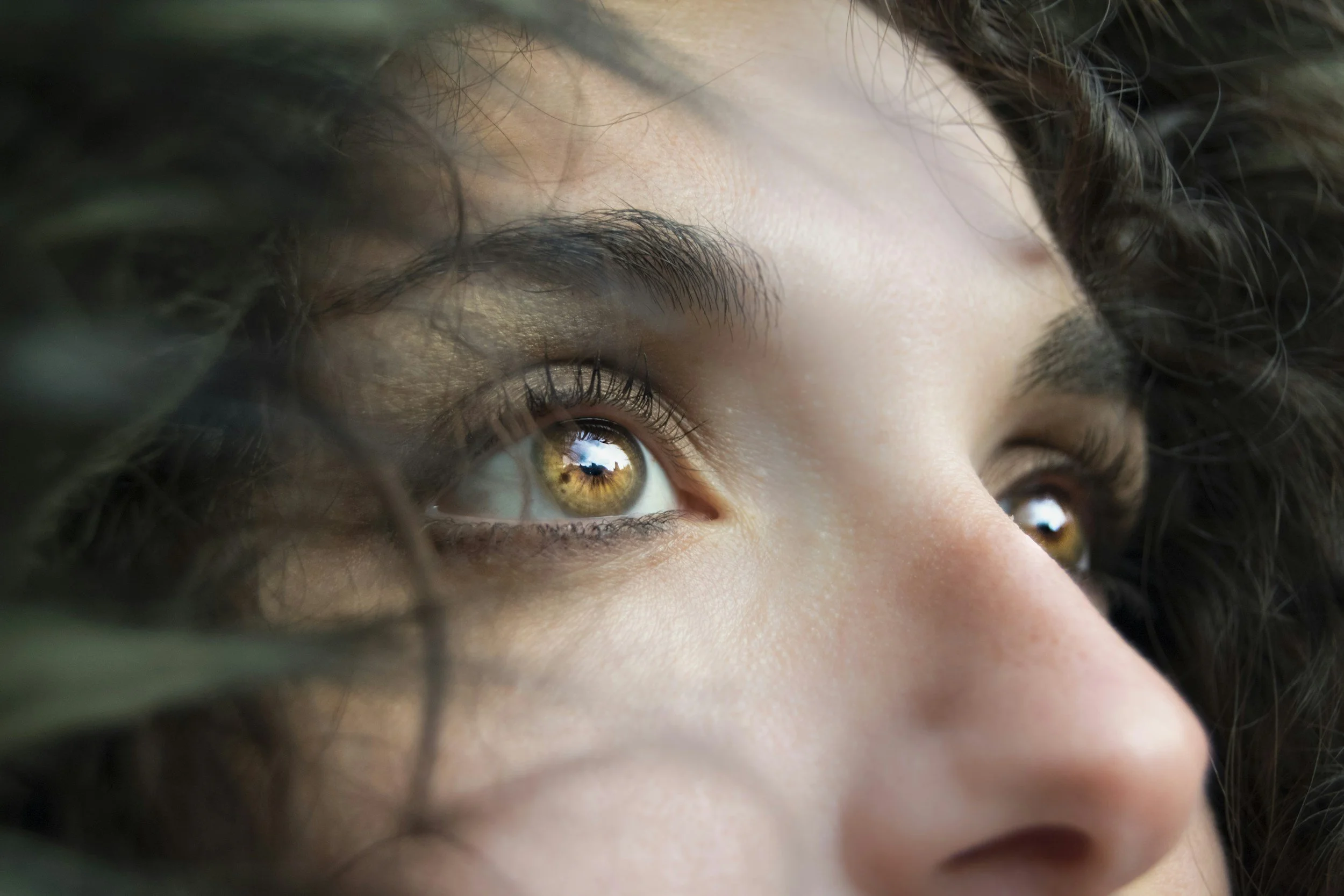
In Chinese Medicine, the eyes are closely connected to the health of the entire body, particularly the Liver system, circulation, and the flow of Qi and Blood. Treatment is individualized and may include acupuncture, herbal medicine, nutrition, and lifestyle recommendations to support eye health while addressing the underlying patterns contributing to symptoms. Chinese Medicine is commonly used in conjunction with conventional ophthalmologic care to support overall eye comfort, visual health, and whole-body well-being through an integrative approach.
Health Coaching
My philosophy is to help patients feel empowered in their own health. Together we explore fitness, nutrition, stress management, sleep, and lifestyle habits while creating realistic, lasting changes—not quick fixes. Through education, mindfulness, habit-building, and accountability, I help patients better understand their bodies and address the root causes of illness whenever possible. My goal is to support each person in building long-term health and living to their fullest potential.
Acupuncture is one of the most widely practiced forms of traditional medicine in the world and continues to be studied in clinical and academic settings worldwide. If you'd like to learn more about the evidence, safety, and global standards behind acupuncture, I've included a few trusted resources below.
World Health Organization – Benchmarks for the Practice of Acupuncture (2021)
World Health Organization – Acupuncture: Review and Analysis of Reports on Controlled Clinical Trials PDF
NIH / National Center for Complementary and Integrative Health (NCCIH) – Acupuncture: Effectiveness and Safety
Thank you for prioritizing yourself by seeking care in this office. And for allowing me to be a pinnacle part of your health care team for your higher wholeness.
Healing is rarely one-size-fits-all. Kokoro Clinic is home to a community of skilled practitioners who each bring their own unique specialties and healing approaches.
Other Practitioners & Modalities at Kokoro Clinic
-
![]()
MARIE KYOKO MOROHOSHI
STAR NATION REIKI
Marie is a Japanese Reiki 靈氣 Master and teacher with deep roots in Japanese healing traditions, sound healing, and community-based care. Based in the Bay Area, she brings decades of experience supporting LGBTQIA+, BIPOC, immigrant, and oncology communities through Reiki, limpias, meditation, and ceremonial healing practices. Her work is grounded in compassion, cultural tradition, and a lifelong commitment to making holistic healing accessible to underserved communities. Visit her website to learn more and book a session here -
![]()
CYNTHIA
REIKI PRACTITIONER
Cynthia offer Japanese Reiki 靈氣 with optional limpia spiritual cleansing. Reiki is a powerful form of spiritual and energetic healing that originated in Japan and promotes healing and transformation. Limpia spiritual cleansing can offer additional support to release and transmute heaviness or stuck energy. Book a consultation or a Reiki session with Cynthia. Email her here
-
![]()
DR. GLORIA D.C.
CHIROPRACTIC
Dr. Gloria, D.C. offers Network Spinal Analysis (NSA) chiropractic care. NSA care is all about upgrading and optimizing the spinal-neural integrity of your nervous system. Through gentle contacts along specific segments of the spine, the energy that flows through the spinal cord & nervous system becomes more resourced, resourceful, and aware of your deeper grace. Book a chiropractic appointment with Dr. Gloria via email here
-
![]()
CARLA
SOUND HEALING
Sound Healing has been practiced for thousands of years to realign the body's vibrations while promoting relaxation, balance, and overall well-being. Sound healing works by activating the Parasympathetic Nervous System (PNS). The main purpose of the PNS is to regulate bodily functions and conserve energy to be used later. The frequencies experienced in a Sound Healing activate the PNS, which slows down your heart, deepens your breath, and slows down brainwaves to a restorative state. That then prompts the body to enter into its individual natural healing process. Visit Carla’s website to learn more and book a Sound Healing session here -
![]()
KYRA
BODYWORK & PAIN MANAGEMENT
Kyra offers massage and is a pain coach and yoga instructor. Kyra combines Myofascial and Craniosacral Therapies, sports massage, movement, and pain neuroscience education to address the whole human, not just the muscles. She will use her expertise as well as your insights about your body and past treatments you have received to craft the best session for you. Book a massage with Kyra here.